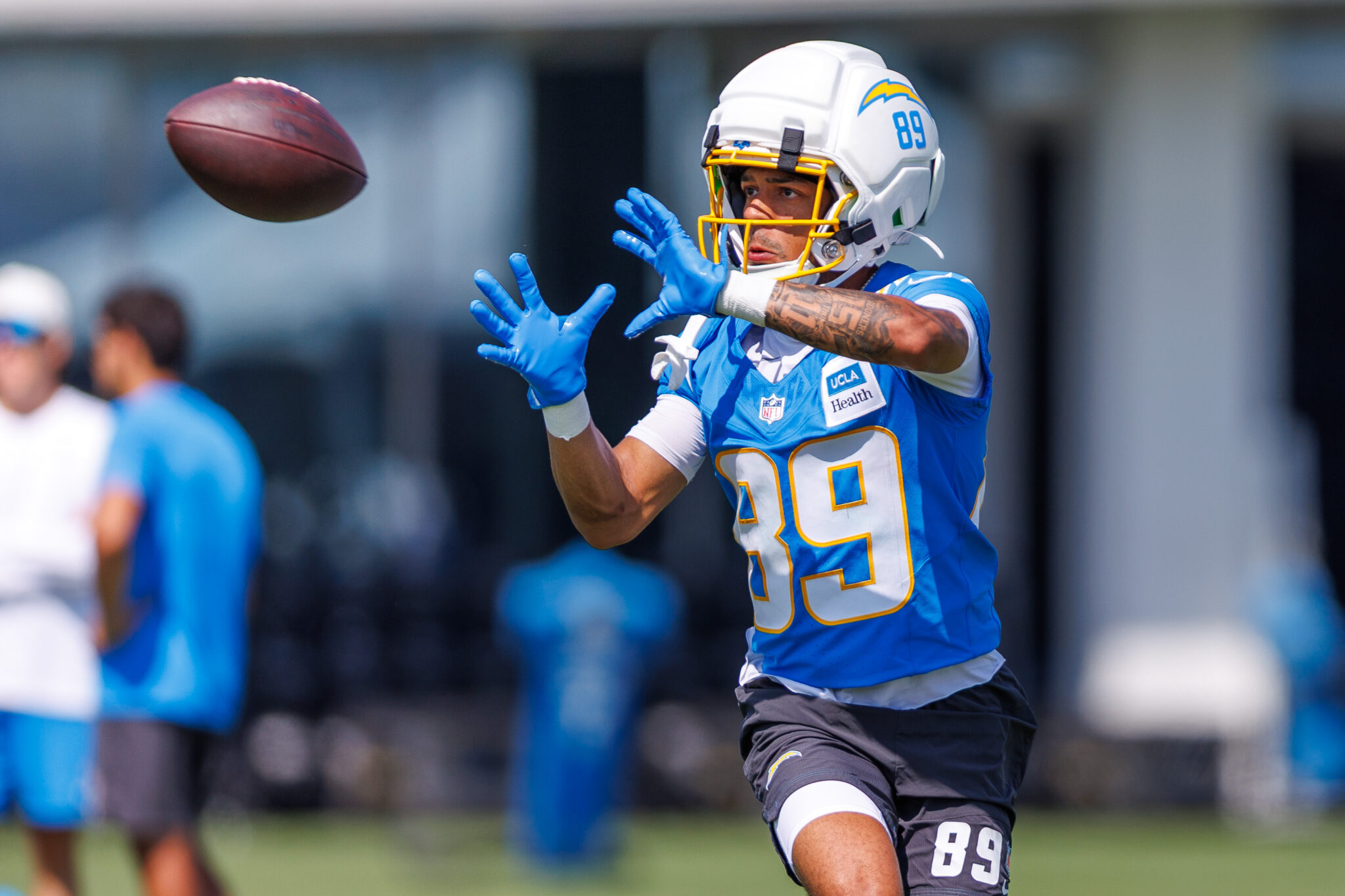
Brenen Thompson has never lacked confidence in his speed.
“I know my speed is pretty much unmatched when I step out on the field, said Thompson during a recent interview during a recent press conference during Chargers training camp. “That’s something I take strong confidence in.”
That confidence is understandable.
Long before Thompson began catching deep passes from Justin Herbert, his swiftness was drawing attention across the Texas Panhandle and eventually the entire country.
The former Spearman standout has quickly become one of the biggest stories from the opening week of Los Angeles Chargers training camp. Thompson, a fourth-round draft pick during the NFL Draft in April, has made multiple plays with the first-team offense while earning strong reviews from Herbert and offensive coordinator Mike McDaniel.
The speed is the first thing everyone notices.
It always has been.
During his final track meet of his high school career, Thompson won state championships in the 100 and 200-meter dashes at Mike A. Myers Stadium in Austin. He blazed a time of 10.24 in the 100 before posting a personal-best 20.73 in the 200, breaking a UIL Class 3A state meet record that had stood for 62 years.
“I wanted to leave a mark on this track that I’ll hopefully spend four more years at, so that’s what I did.” Thompson said after the meet.
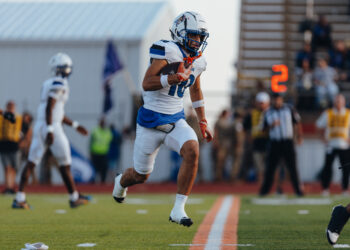
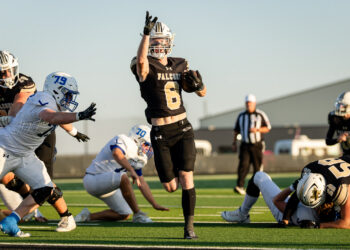
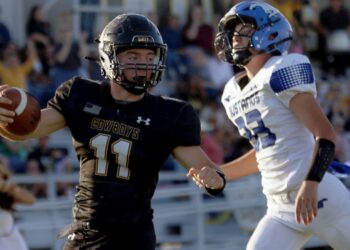
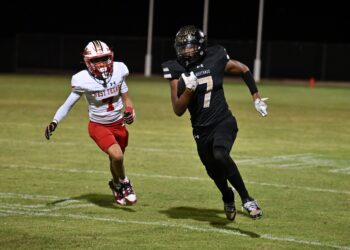
He certainly left one. Thompson finished his career as one of the most accomplished athletes to come through Spearman and one of the best sprinters in Texas Panhandle history. He earned a remarkable 38 Division I football offers and became nationally known after a video of him running a 10.15 as a sophomore spread across social media.
His relationship with track, however, was not always what people might expect from one of the fastest athletes in the country.
“To be fair, I really hate running, but I’m really good at it,” Thompson said during his Chargers news conference.
Now his speed is getting noticed at the highest level.

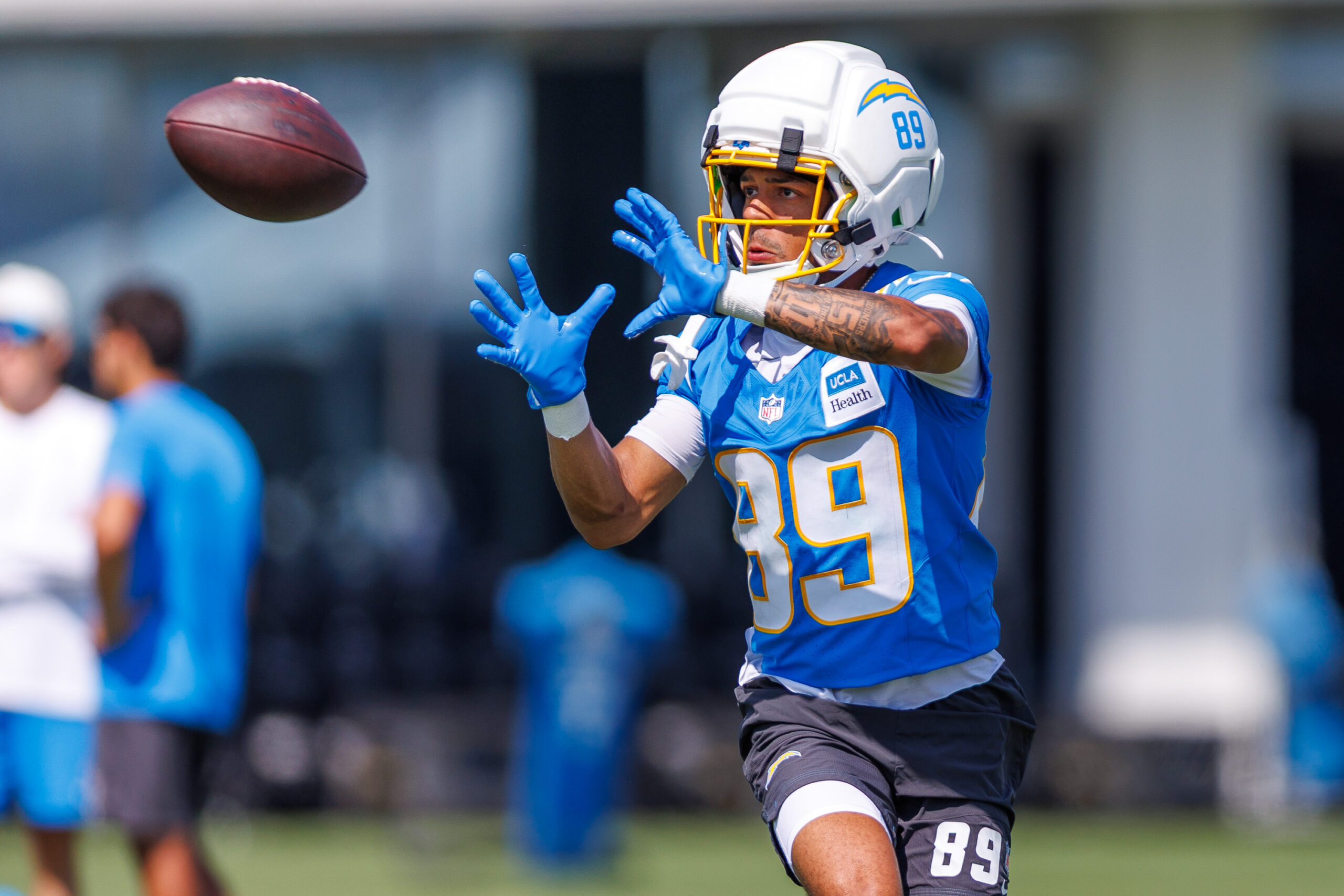
Thompson has connected with Herbert on several deep receptions during the first days of camp, including a sliding catch and other explosive plays during team periods. He has received opportunities with the starting offense and appears to be making the most of them.
Herbert told reporters Thompson is going to be very good and predicted the rookie will make a lot of plays.
Thompson understands what that praise means, but he also knows earning the quarterback’s trust requires much more than running past defensive backs.
“I think it’s awesome,” Thompson said. “Obviously, he’s been a great quarterback, great leader to this whole team and this whole club. I think that’s a goal of every rookie when they’re coming in, is to gain the trust of their fellow teammates and coaches. And I’m working very hard every day to do that.”
McDaniel’s assessment may have been even more meaningful. The Chargers offensive coordinator said Thompson had captured the attention of the quarterback room through his attack and ownership of the offense.
That is what makes Thompson’s early performance more significant than a few long catches during training camp.
The Chargers already knew Thompson could sprint. Years of track results provided plenty of evidence. The more important question was whether he could learn a complicated NFL offense quickly enough to earn Herbert’s trust.
Thompson has not tried to hide how difficult that transition has been.
“Early is very, very tough, and very difficult,” Thompson said. “I’m coming from a system that’s like hand signals, no huddle. And this is all huddle, 20-word, coming from the quarterback.”
Instead of receiving a short signal from the sideline, Thompson must hear an extended play call in the huddle, identify the portion that applies to him and understand exactly what he is expected to do.
“I’m used to one-word calls in college and now it’s 20-word calls,” Thompson said. “You’re having to really get the call from the quarterback and dissect which part belongs to you and then go out there and execute.”
That adjustment can prevent even the most physically gifted rookie from playing early. A receiver cannot use his speed if he does not know where to line up or which route to run.
Thompson understands that reality.
“You can’t really play football if you don’t know what you’re doing,” he said.
He has placed an emphasis on studying his assignments while also taking mental repetitions during the plays given to other receivers. Thompson estimated that can mean learning from another 60 or 70 practice plays beyond his own repetitions.
He has also studied established Chargers receivers such as Ladd McConkey and Quentin Johnston.
“I’ve picked those guys brains a lot,” Thompson said. “Whether it’s a certain route or a certain play, or just how do they see these things? I think they’ve both been very great, very complimentary of me and what I’ve been able to do so far.”
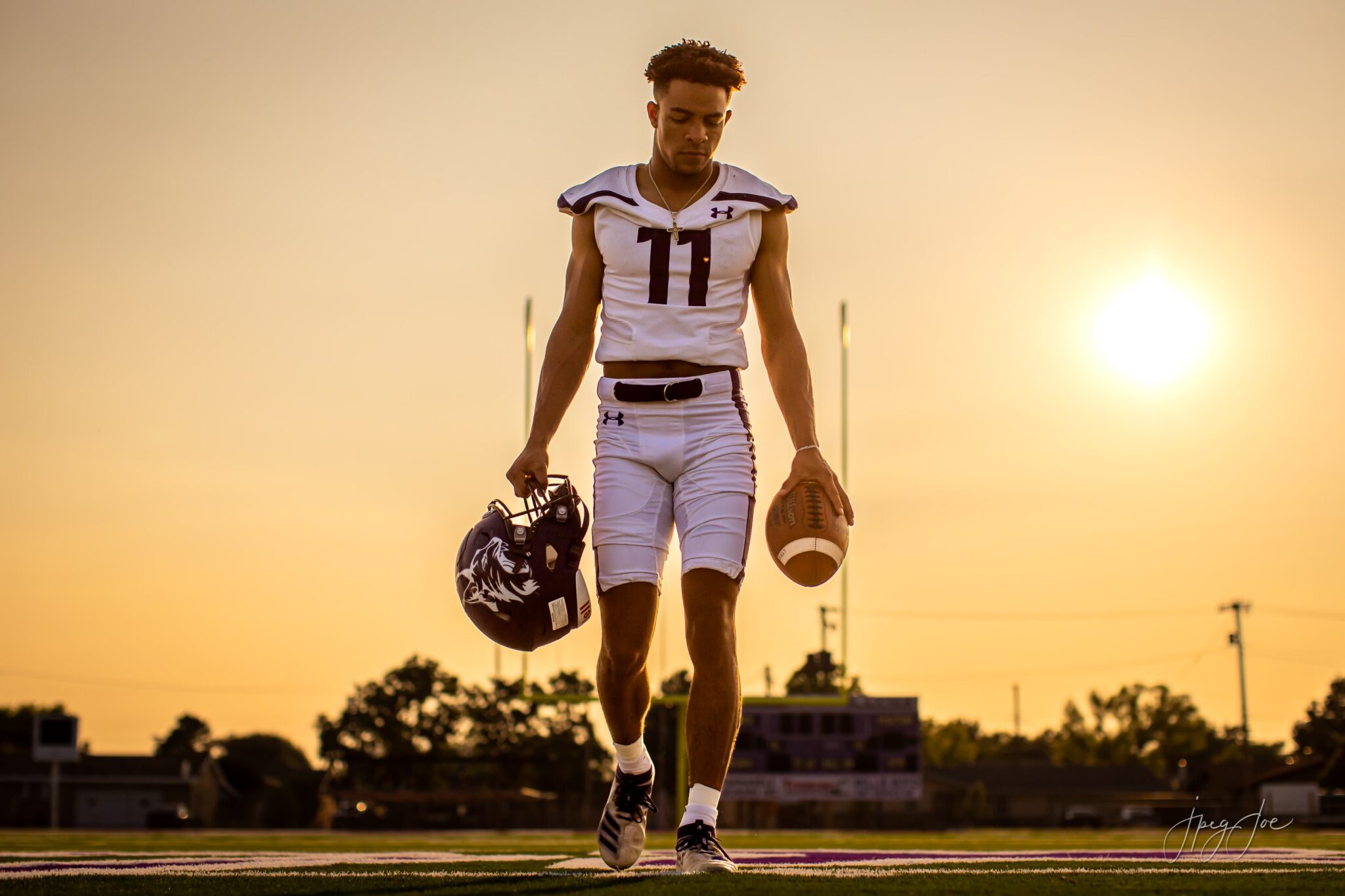
His college journey may have helped prepare him for the challenge.
Thompson played at the University of Texas, Oklahoma and Mississippi State, forcing him to repeatedly learn new offenses, terminology and coaching styles. After showing flashes during his first three seasons, everything came together during his final year with the Bulldogs.
That breakout season turned Thompson from an intriguing speed prospect into an NFL draft pick.
Developing chemistry with Herbert now requires Thompson to run each route with the same timing, depth and detail every time.
“I definitely think it’s all on me, showcasing that in practice so there’s no switch-up in the game and everything is super consistent,” Thompson said. “This needs to look the exact same every single time I run it, so he knows exactly where to put the football.”
That type of consistency is how a rookie earns the confidence of a franchise quarterback.
Thompson is also willing to find other ways onto the field. The Chargers have given him work in the return game despite his limited experience returning kicks and punts in college.
“I came here to contribute, to make this team better,” Thompson said. “Whether that’s blocking, running special teams or whatever that is, I’m going to put my best foot forward.”
There is still a long way to go.
Training-camp praise does not guarantee regular-season success. Thompson must prove he can handle physical defensive backs, execute the details of the offense and contribute when the football is not coming his way.
He is also competing for snaps in a receiving room with several players possessing different strengths and skill sets.
Thompson is pleased with the progress he has made since offseason workouts, but he is not treating a strong opening week as an accomplishment by itself.
“I’m nowhere near where I want to be right now,” Thompson said. “I think if I was, there would be kind of issues.”
Still, he has already completed an important first step. He has made Herbert and the Chargers’ coaching staff take notice.
Years ago, Thompson said he wanted young athletes to understand that it did not matter where they came from. He arrived at Spearman as a 145-pound freshman without a college offer and left as one of the most heavily recruited athletes in the country.
His journey has now taken him from Spearman to three major college programs and into an NFL training camp.
The speed has never been questioned.
Thompson’s preparation, attention to detail and early connection with Herbert are giving the Chargers reasons to believe there may be much more to come.