
They’re halfway through their 2026 season, and right now the Amarillo Sod Poodles are in the middle of their longest homestand of the year at Hodgetown.
The Sod Poodles have a six-game series this week against the Frisco RoughRiders to open the second half of Texas League play following their most successful six-game series of the season at home against the Midland RockHounds, winning five. During these two weeks, the most important person on the Sod Poodles probably won’t be on the field or in the dugout, but will still have their work in full view of those in attendance at Hodgetown.
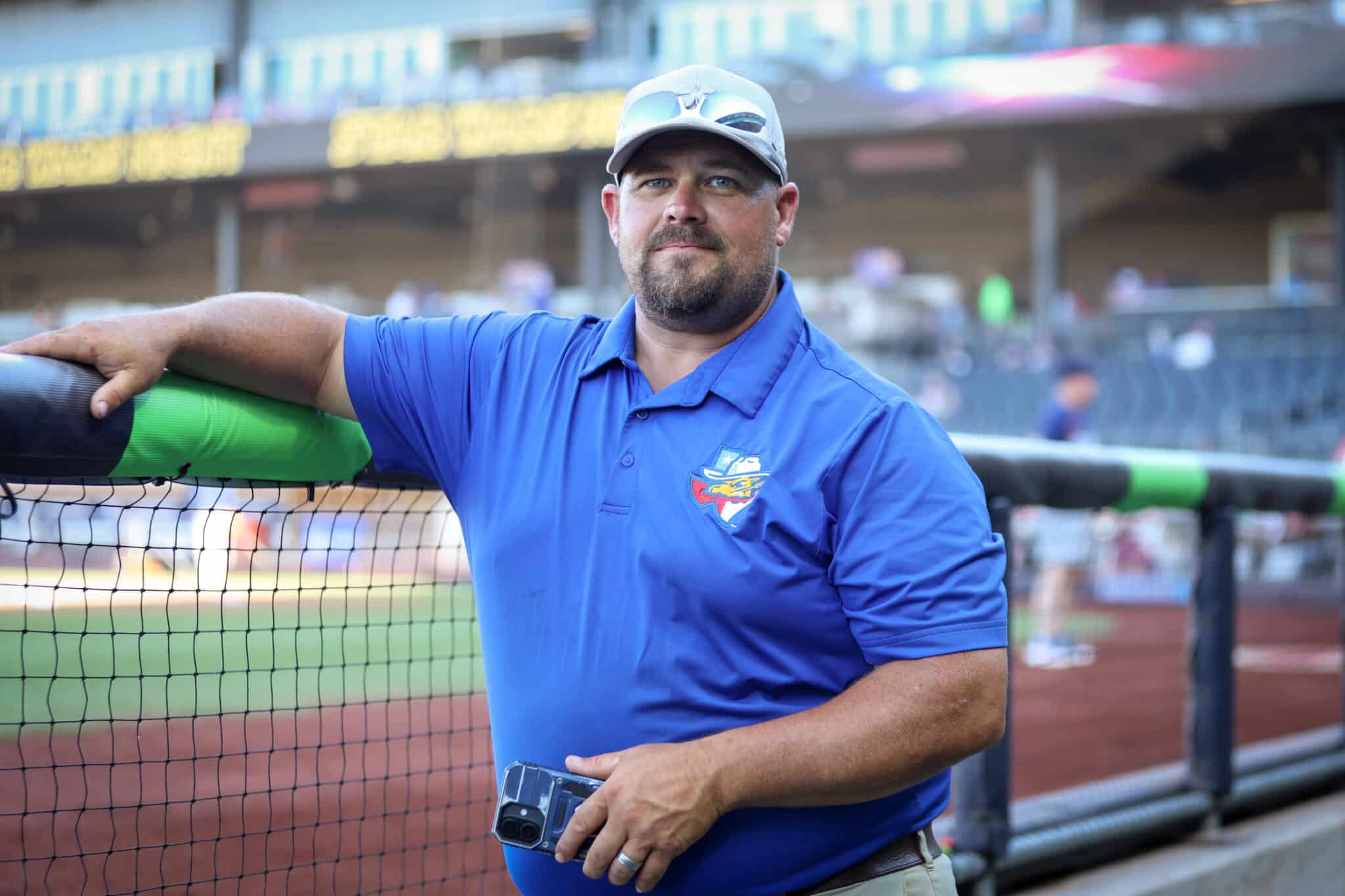
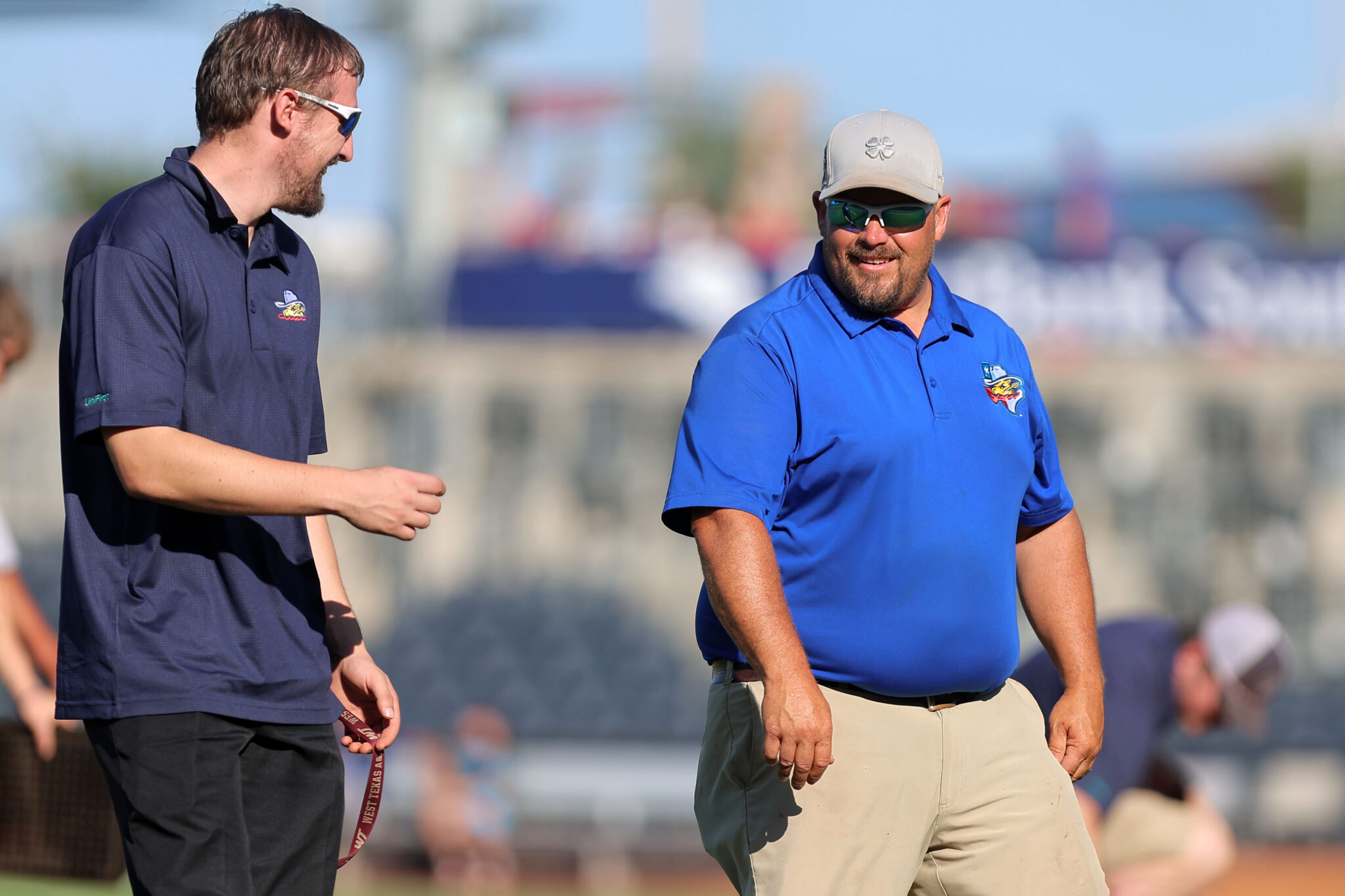
With players coming and going and everybody going back home at the end of the season in September, Jason Floyd is the most steady presence on the field at Hodgetown. After all, he’s in charge of keeping it in shape.
Floyd, the head groundskeeper at Hodgetown since 2022, leads the crew who makes the field as playable as possible from day-to-day. Last year, Floyd was named the Texas League Groundskeeper of the Year for keeping Hodgetown’s grass and dirt in top shape from last April to September.
For someone whose work takes place privately, but is seen publicly, Floyd is happy that he hasn’t remained anonymous.
“It’s always a privilege to get recognized for the work you do,” Floyd said. “I’ve got two guys on my day crew who do a really good job of busting their butts and helping me to make this field what it is. It’’s very special to get recognized for a minor league award for what we do here.
“I want people to see what we do. I don’t see it as a behind the scenes thing as much as trying to give these guys a product that they can play on to get to the end goal.”
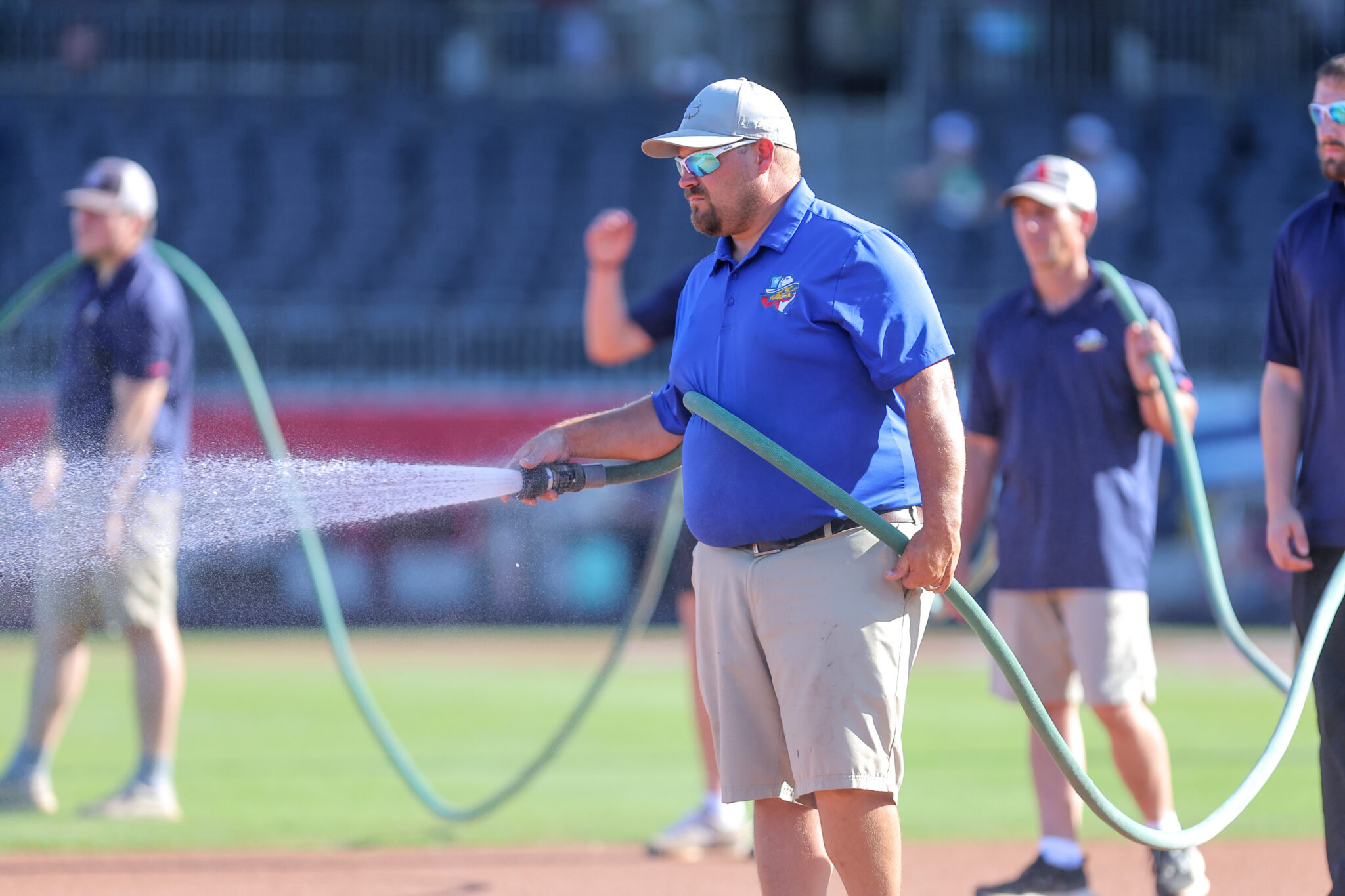
That’s been Floyd’s job since 2022, when he was named the head groundskeeper at Hodgetown. He also interned with the Houston Astros and Minute Maid Field in 2006.
During the season, Floyd and his crew do whatever it takes to keep the outfield grass and infield dirt surfaces, among other things, in the best condition possible. With the Sod Poodles players just two steps away from the major league parent club Arizona Diamondbacks, the field needs to be up to the quality of the play.
“I think what Jason and the work that all of his crew do is vitally important,” said Sod Poodles president and general manager Tony Ensor. “We have eight top 30 Arizona Diamondbacks prospects on this team and that’s a lot of weight on our shoulders. How these guys perform has a lot to do with the field. Our job is to provide a pristine environment for these guys to play.
It’s a job that on game day, starts in the morning and isn’t finished until well after the game is over and almost everybody has gone home. Floyd, a native of Canadian, was previously an assistant groundskeeper and superintendent at Ross Rogers Golf Complex from 2014-19 and worked part-time on the Hodgetown ground crew during the Sod Poodles inaugural season of 2019.
He knows making the grass look good is one thing, but making the field viable for Class AA baseball is bigger.
“We try to keep the field as safe and playable as possible,” Floyd said..”Obviously looks are part of that as well. I guess coming from the golf course side growing the grass is a fairly easy thing. I think the harder thing for our climate is keeping the infield moisture under the dirt where it’s supposed to be like it needs to.”
The result of pregame field maintenance can’t be judged until a game is completed on the field. Javier Colina, who has managed the Sod Poodles the last two seasons, has had few complaints.
“A lot of credit for Jason and the rest of guys who keep the field in shape,” Colina said. “This is one of the best infields and outfields surface-wise. When you are a player and you go to a field that’s in great shape, that builds confidence. That’s why (Floyd) won that award.”
The daily routine
Getting a field ready for an evening game obviously isn’t like spending a summertime Saturday morning in your yard, mowing and maybe pulling weeds before it gets too hot. It’s like doing that three times before the day ends.
Things do start similarly during the summer, though, as Floyd and his crew get working the morning of game day.
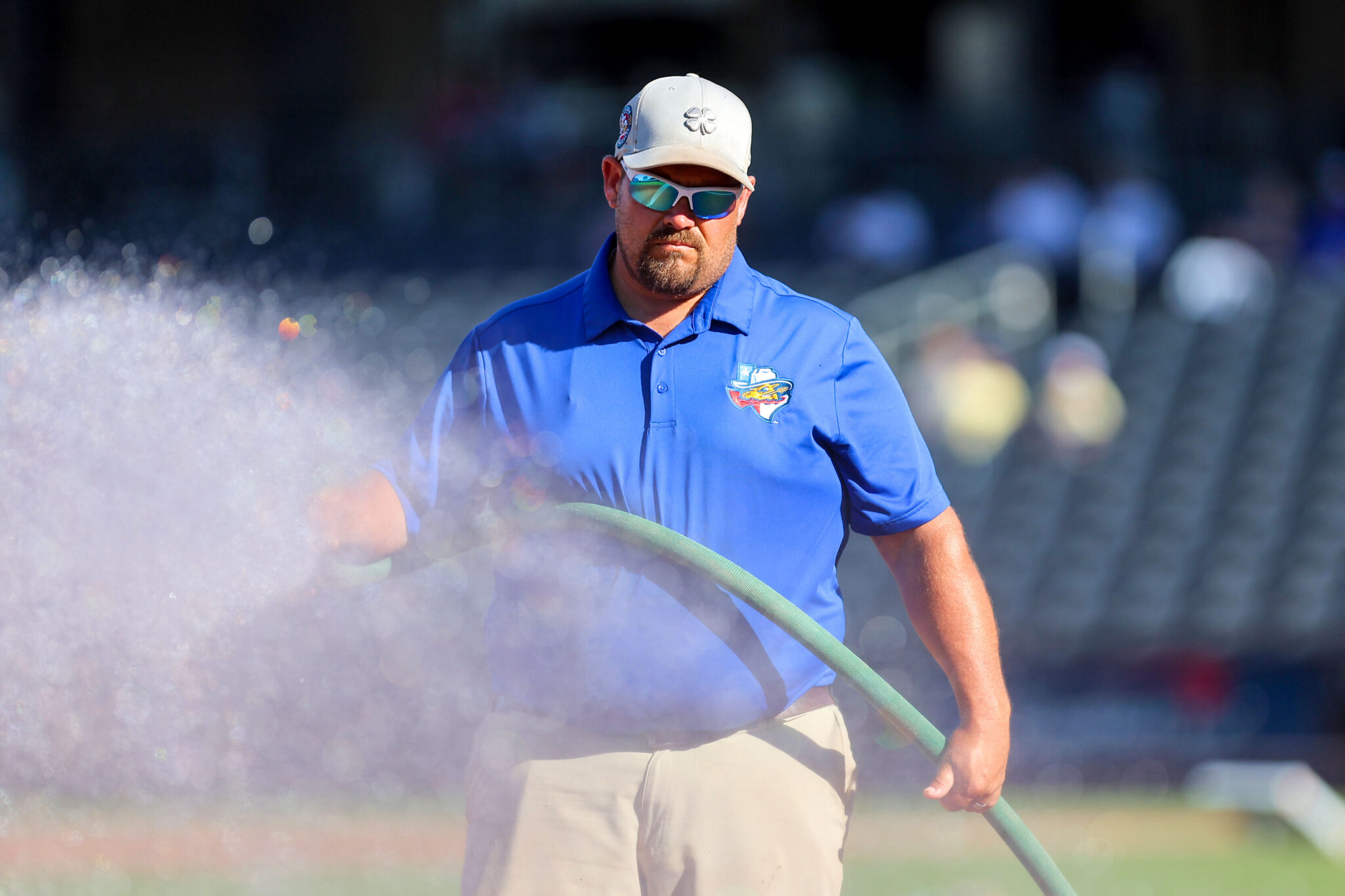
“The day crew gets here around 9 a.m. and I typically show up around 8,” Floyd said. “The first thing we come down and do is water the infield. We need to get some moisture in it so it’s not as hard as a brick. Then we need to mow in stripes and patterns.”
Think the infield is just watered once before a game? The crew will drag it and water it a second time while looking for divots.
“By that time it’s usually lunch,” Floyd cracked.
Floyd’s day isn’t even half over, though. He and the crew then have to make sure things are ready for batting practice and taking infield
They start the setup for batting practice, bringing out the cages, mats and tees at 1 p.m. and (you guessed it) the field is dragged and watered again before the teams come out.
Having started as a groundskeeper himself 35 years ago, Ensor knows Floyd’s routine well. That’s what makes him appreciate how Floyd and his crew prepare Hodgetown for a game regardless of external conditions..
“The technology and chemicals are so much different now than when I started,” Ensor said. “It’s very technical now. You almost have to be a chemist to understand what (Floyd) does every day out there to make that grass look green. We’re so grateful and happy to have Jason because what stands out about him more than anything is he’s a local guy with so many contacts.”
Floyd’s skills are now on display for two weeks straight without a break. He said that during a typical six-game series at Hodgetown, the grass has to be mowed every day.
Over two weeks, extra scrutiny, including how much the field needs to be watered, is required, and the work needed to maintain the field becomes that much more amplified.
“A back-to-back home stand is really hard not just on the people but the grass as well,” Floyd said. “The grass can take some abuse but if we have multiple days over 100 degrees with guys out on it, it definitely takes its toll. On off weeks we might do some sod work here and there for areas which need it. That’s where our grounds crew comes in and really does a great job.”
Being local is what led Ensor to hire Floyd to oversee Hodgetown’s maintenance.
“I wanted that local pride,” Ensor said. “I knew he had a technical background. He had some experience with the Houston Astros as an intern. I think he just brought the whole package. When you take that technical knowledge and you combine it with what’s in his heart, you just can’t lose.”
Play ball!
It would appear that once the Sod Poodles starter throws the first pitch of the game that Floyd and his crew can relax and enjoy the game, and that often happens. That doesn’t mean Floyd might not make a cameo on the field while the game’s in progress.
In the opening game of the homestand against Midland, Floyd had to go out and replace second base between innings. Watching from the dugout, he saw something amiss.
“We just replaced the second base anchor before the last homestand and the guy that replaced the base didn’t spoon out all the conditioner that got drug in there when they did the game field drag,” Floyd said. “I noticed the base sitting up. The player safety, you don’t take a chance on that, even if it holds up the game a little bit.You do what you need to do.”
That attention to detail and player safety is something Colina appreciates.
“They hold themselves to a high standard and ask questions to me and the players like how does the infield play and is it too hard or too soft,” said Colina of the grounds crew. “It’s a good balance. They’re open to all suggestions. A lot of respect for those guys because they spend a ton of hours daily here trying to get the stadium into the best shape they can.”
Of course, you can’t please all the people all of the time. Making both grass and dirt surfaces safe and playable is a challenge in and of itself.
Then there’s the pitchers’ mound.
“The pitchers’ mound is the focal point,” Floyd said. “It’s also one of the hardest things to maintain correctly. To make it through a game without having clay blow out or having pitchers dig big holes is tough. The mound is the trickiest thing to maintain on this field.”
Aside from off-kilter bases, it’s also the one thing that most requires instant attention if there’s a complaint. If it starts drying out, cracking or busting in the middle of the game, then Floyd and his crew need to get on it.
No matter how smoothly a game might go, Floyd isn’t done when the game is. The crew cleans up after the game before worrying about the field as such the next morning.
“Once everybody’s off the field that’s where the game crew goes to work repairing everything,” Floyd said. “We repair home plate, the game mound and the bullpens, drag the infield and start watering and that’s usually the end of our night. It usually takes us about 45 minutes to an hour.”
Then it starts all over the next day. Weather permitting.
Rain, rain go away
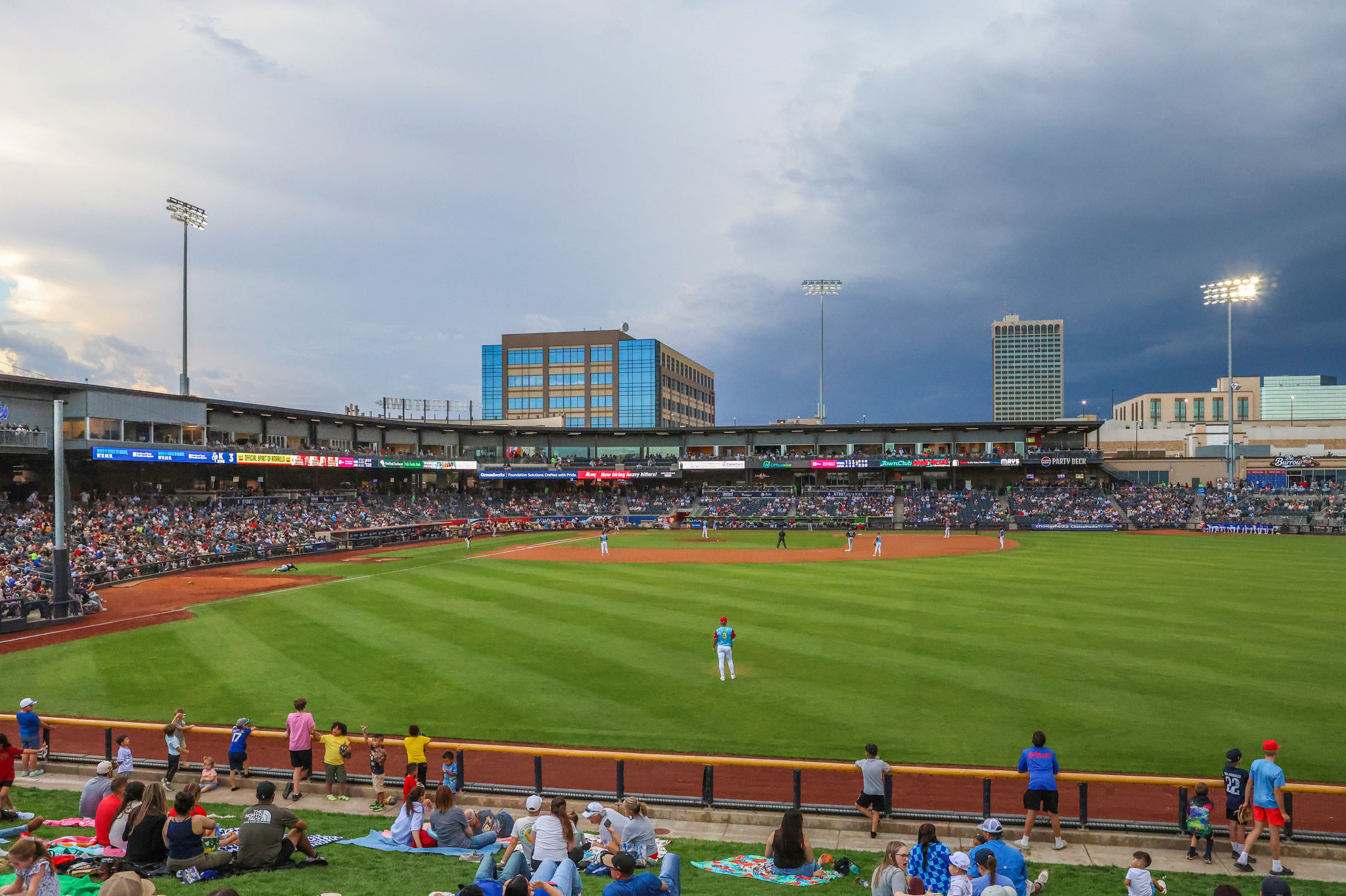
There are other things that Floyd, or anybody else, can’t control in preparing Hodgetown for game time.The sheer unpredictability of the Texas Panhandle weather can change plans for games in 15 minutes or less.
If rain clouds start descending on Hodgetown before the first pitch, that can undo Floyd and crew’s handiwork. Then a decision needs to be made how to best manage a post-downpour scenario.
“It’s hour by hour or minute by minute depending on the situation,” Floyd said. “That’s where communication on our end is really critical. I’m communicating with managers of both teams, umpires and with Tony. We all make that decision, especially if it’s pregame if we’re pulling tarp.
“There’s times where that decision making has to be quick. I have input but I leave that in Tony’s hands because this is his ballpark.”
If weather gets bad enough though, the field is literally in Floyd’s hands, and those of his crew. In his fifth year as Hodgetown’s surface caretaker, Floyd never faced a bigger challenge than on opening day of 2025.
It was literally raining on the Sod Poodles parade, as even getting on the field on opening day was in question. While the rain stopped, the situation still looked dire as far as starting the season as anticipated.
“We had four inches of snow two days before and it was a wet snow,” Floyd said. “I came in on Monday and I could not even walk on the field, but we still ended up getting the game in on Tuesday. It was an all-day affair on Tuesday. The guys didn’t take BP or infield and it was opening day. That just tells you what kind of crew we have here.”
The work is appreciated by those who have to set foot on the field six nights a week during a typical homestand. Colina knows things are rarely perfect, but he says he’s never had an issue with Floyd and his crew.
“As soon as the ball hits grass and changes to the dirt means a lot” Colina said. “As infielders everybody’s different. There are little things where you adapt to go to different fields, but this one is amazing.”
A year-round job
Rain or shine, the condition of the field fans see during a Sod Poodles game on opening day hardly happens overnight. The Sod Poodles aren’t Hodgetown’s only tenant and the field has been used for concerts and cook-offs in the past, presenting further challenges for Floyd and crew.
Once baseball season is over, attention to the field is far less intensive, but maintenance can’t be ignored.
“We might take a little bit of time off after the season’s over with,” Floyd said. “We start hosting Amarillo College at the end of January and we’ve got high school games here. We stay pretty locked down and we’re working on detail stuff. We’ll make sure that all the measurements we have to follow are in place. Believe it or not, with freeze and thaws in this part of the world it can move the base anchors.”
Floyd’s work is most visible from April to September when it’s available for the public to see. Fans see the results far more often than they see the labor.
It’s the labor that Ensor most appreciates, and why he nominated Floyd for Texas League’s top groundskeeper.
“We put him up for that because we know what he puts into the field,” Ensor said. “Every team that nominates a groundskeeper has to provide a detail of why and we just think so highly of him. We think we’ve got a pretty special one here.”
At the end of what can sometimes be a 16 hour day, Floyd finds his reward in his work.
“I don’t have to be here that early but I choose to be because I love what I do,” Floyd said. “I want to make sure it’s as good a surface as I can give these guys.”